
 ®
Every environment. A protection decision.
Oil, gas, energy and metals: four settings for understanding industrial workwear needs. Application is defined by the task and hazard, not simply by the industry's name.
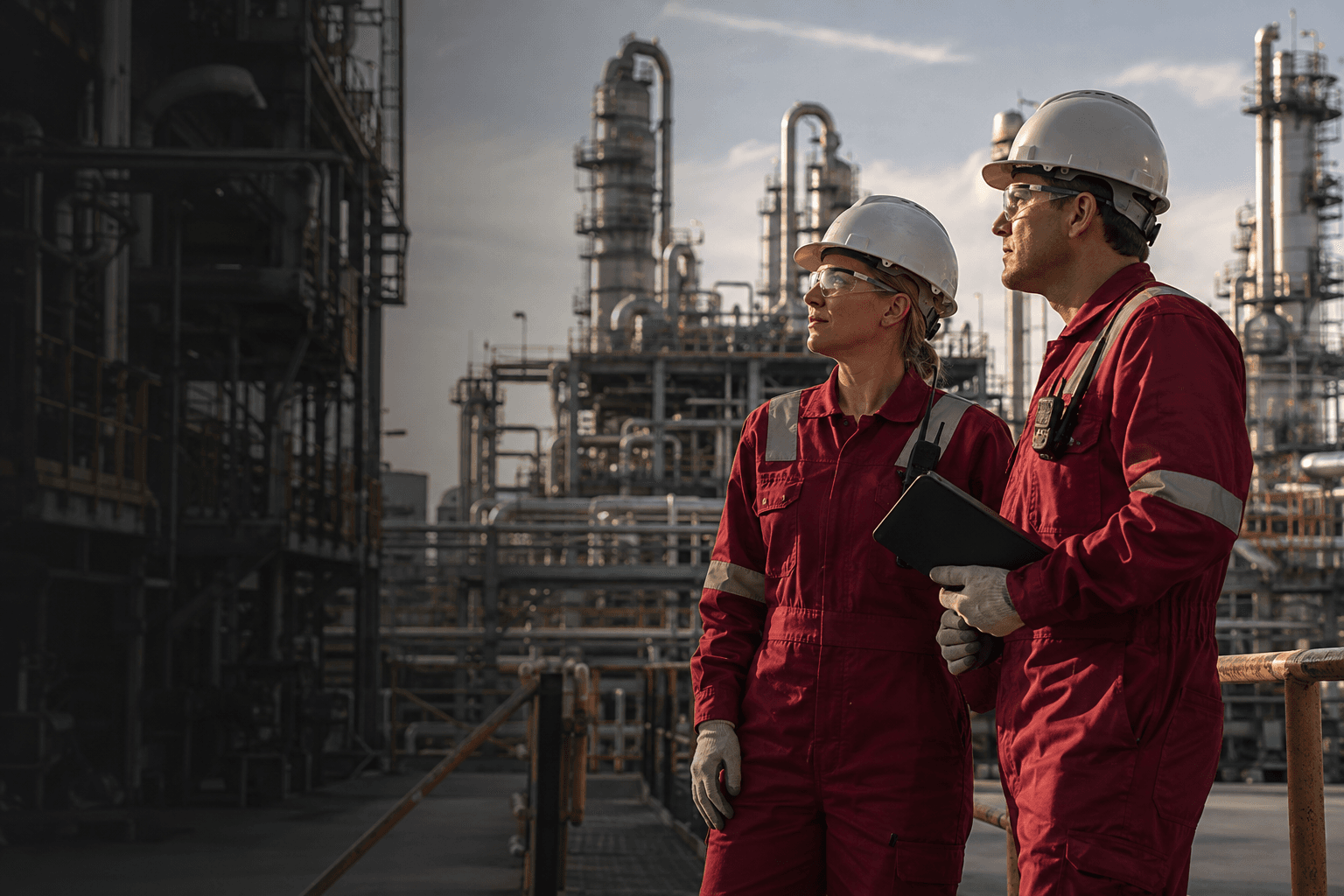
Oil and petrochemicals
At refineries and petrochemical plants, FR clothing is part of protection programs addressing short-duration thermal exposure. Selection must consider the actual task, flammable substances and the complete protective ensemble.
- Hazard to assess
- Flash fire and thermal exposure
- Textile protection
- NFPA 2112 addresses short-duration industrial thermal exposures. FR fabric, body coverage and garment components work together as a protective system.
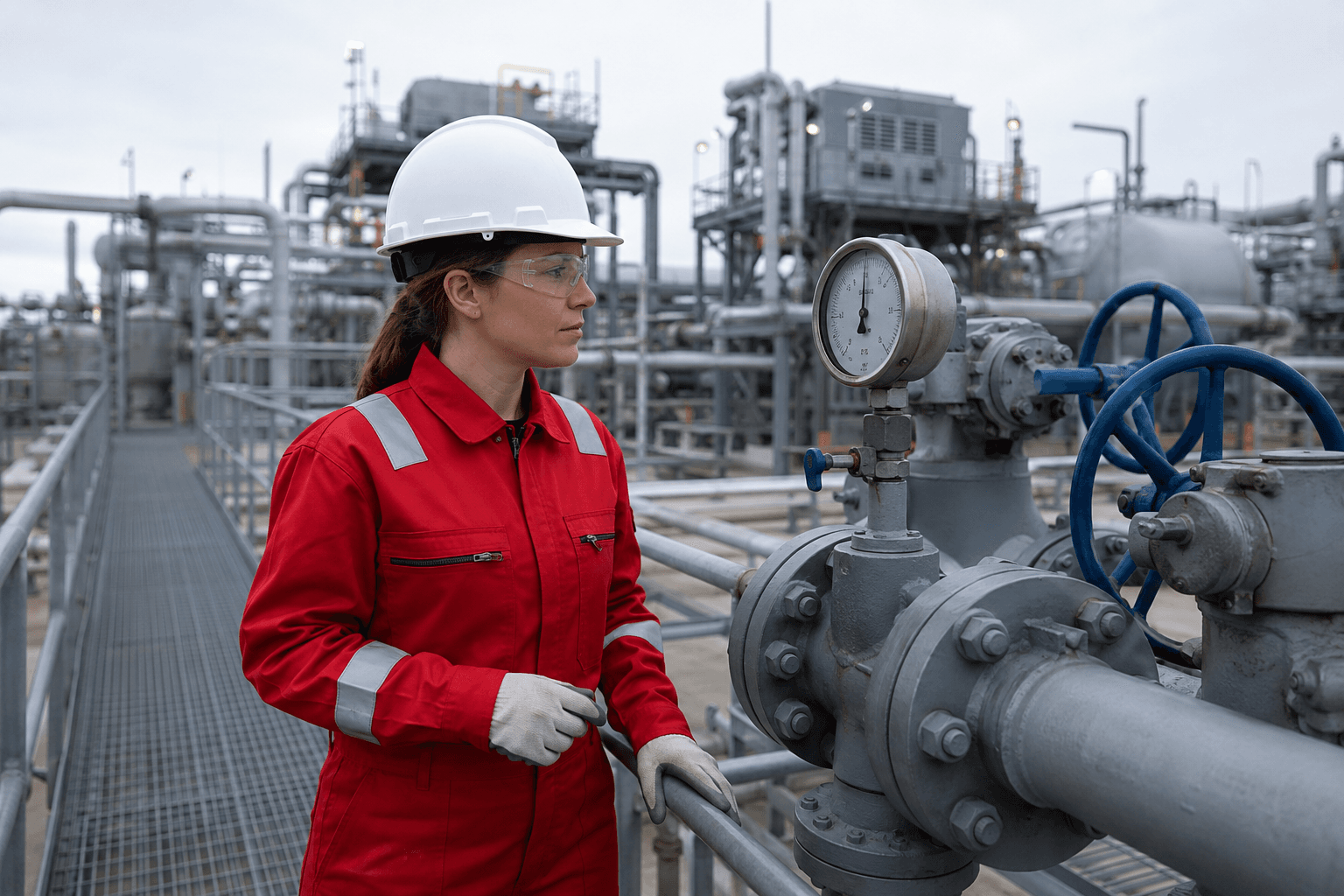
Gas and processing
Gas plant and network operations require consideration of both flame exposure and electrostatic charge buildup. Anti-static fiber is one part of the textile solution, alongside other workplace measures.
- Hazard to assess
- Flame and electrostatic behavior
- Textile protection
- Electrostatic dissipation combines fabric, clothing, footwear and grounding. It is a different function from electrical insulation.
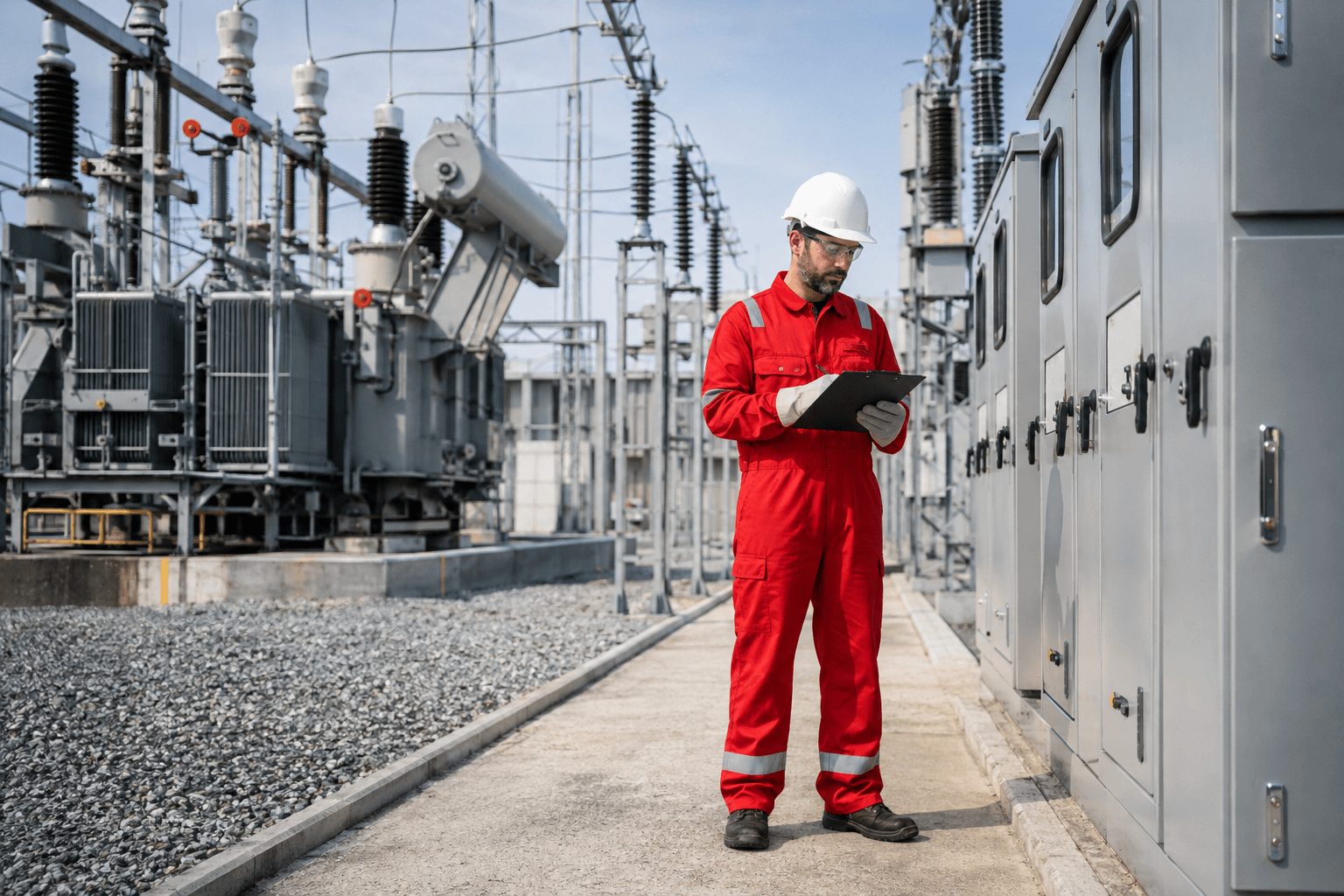
Electrical energy
An electric arc can produce intense thermal exposure. Clothing selection requires knowledge of incident energy and the protective system's arc rating; flame resistance alone does not establish that rating.
- Hazard to assess
- Electric arc and incident energy
- Textile protection
- Incident energy and the clothing's arc rating are the selection parameters for this exposure.
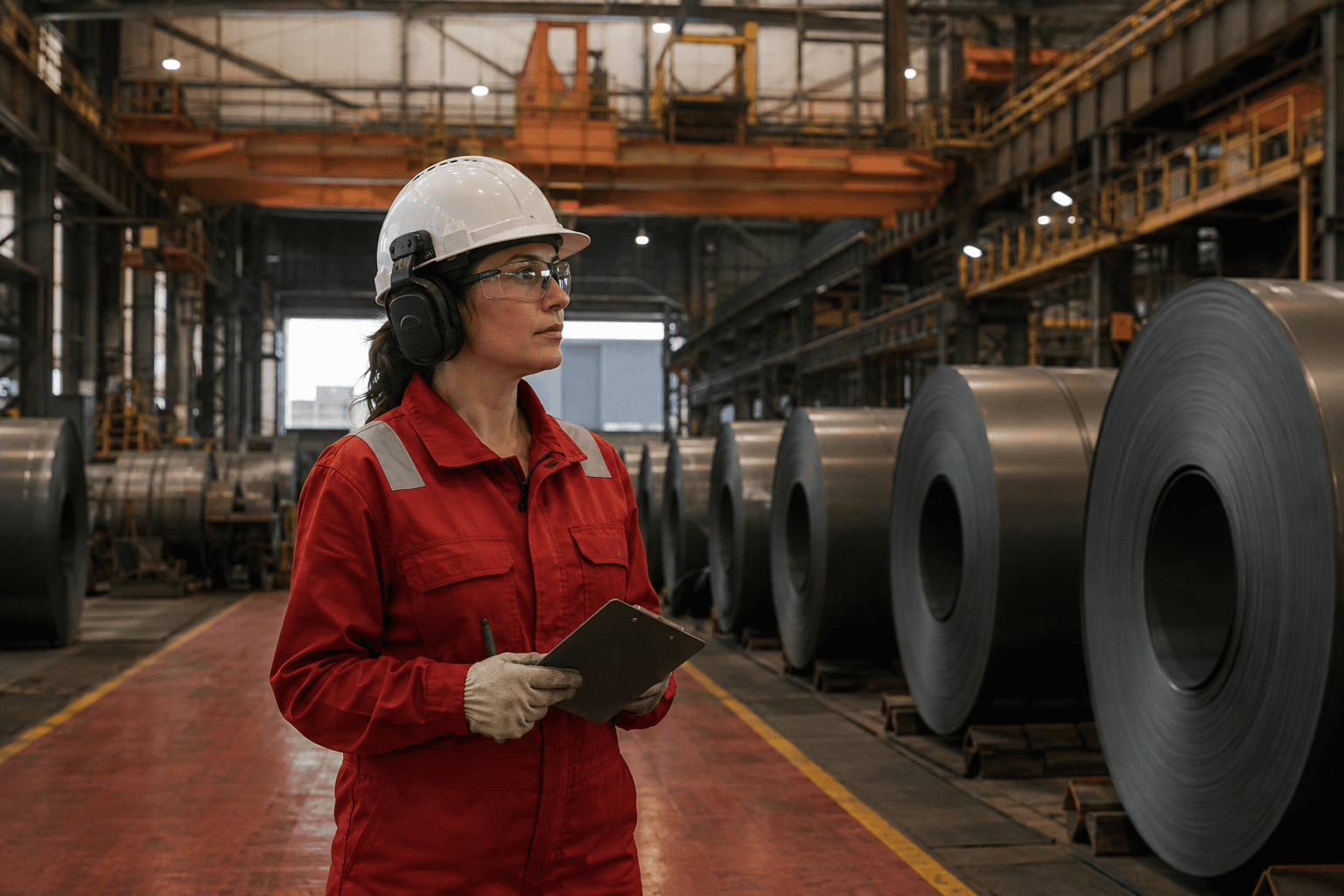
Metals and manufacturing
Metalworking facilities bring together different tasks and exposures: maintenance, heat, welding and, in some processes, molten metal. Each requires a specific selection of fabric, weight and garment design.
- Hazard to assess
- Heat and process-specific hazards
- Textile protection
- Splash protection depends on the metal or alloy, heat transfer and tested garment performance.
Your next specification starts with a conversation.
Connect with our team about fabric, finishes and documentation for your industrial application.